
Fruit Ninja is a swipe-to-slice arcade game from Halfbrick Studios, an independent studio in Brisbane, Australia. It launched on iOS in April 2010, per Wikipedia’s release history, and now runs on iOS, Android, consoles, and VR headsets. The standard mobile version is free with ads and optional in-app purchases, per its App Store and Google Play listings; per Halfbrick’s own site, the paid original survives as Fruit Ninja Classic, and a sequel, Fruit Ninja 2, arrived in 2020. My verdict up front: the slicing is still the purest thirty-second loop on a phone, but the free build wraps it in more menus and monetization than it deserves.
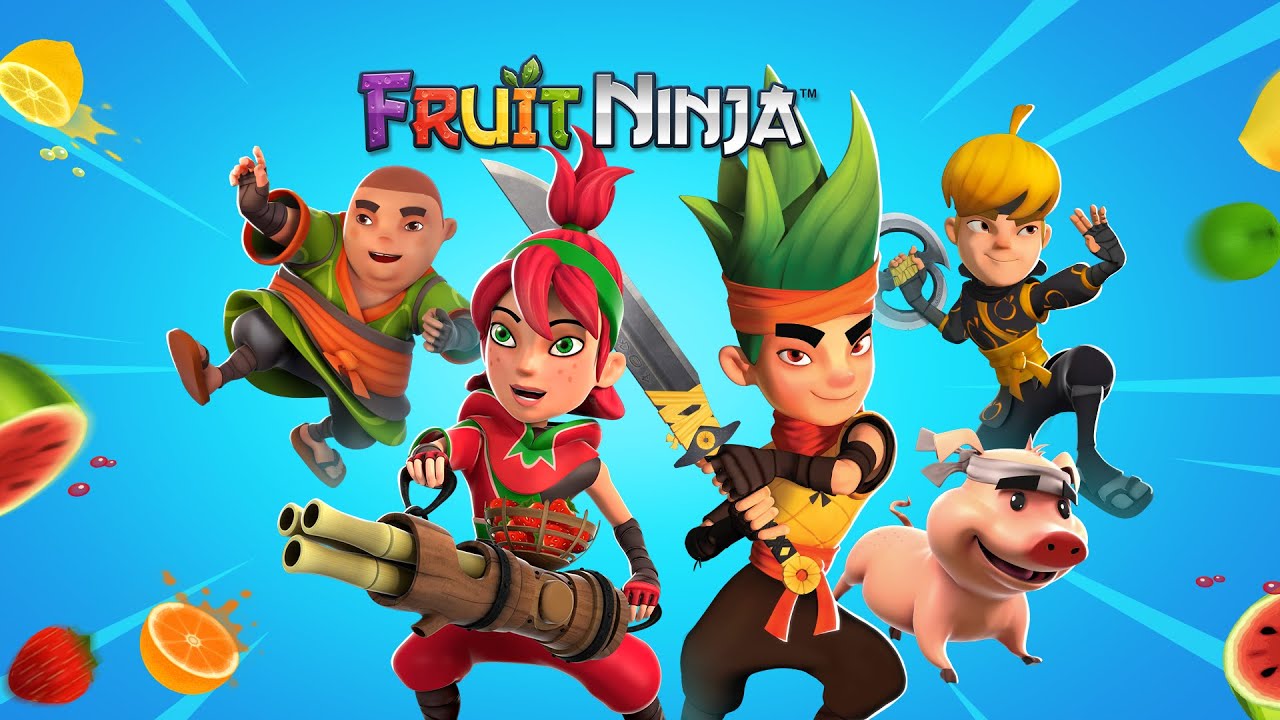
I reinstalled it recently with one question: does a 2010 icon still earn pocket space in 2026? Waiting on a late dinner delivery, my thumb drew the old corner-to-corner arc before the menu finished loading. That reflex never uninstalled, so I kept playing to see what else survived.
Is Fruit Ninja Still Worth Playing in 2026?
Yes — as a reflex game it holds up better than almost anything from its era. One gesture controls everything, so new players need zero instruction. Its reach was historic: Kotaku reported one billion downloads by 2015, and TechCrunch noted in 2012 that a third of US iPhones had it installed.
Most hits from that period aged badly; this one aged into a fidget toy, and I mean that as praise. I wouldn’t call it essential anymore — I’d call it the reference point every quick-session game gets measured against.
How Does the Fruit Ninja Game Actually Play?
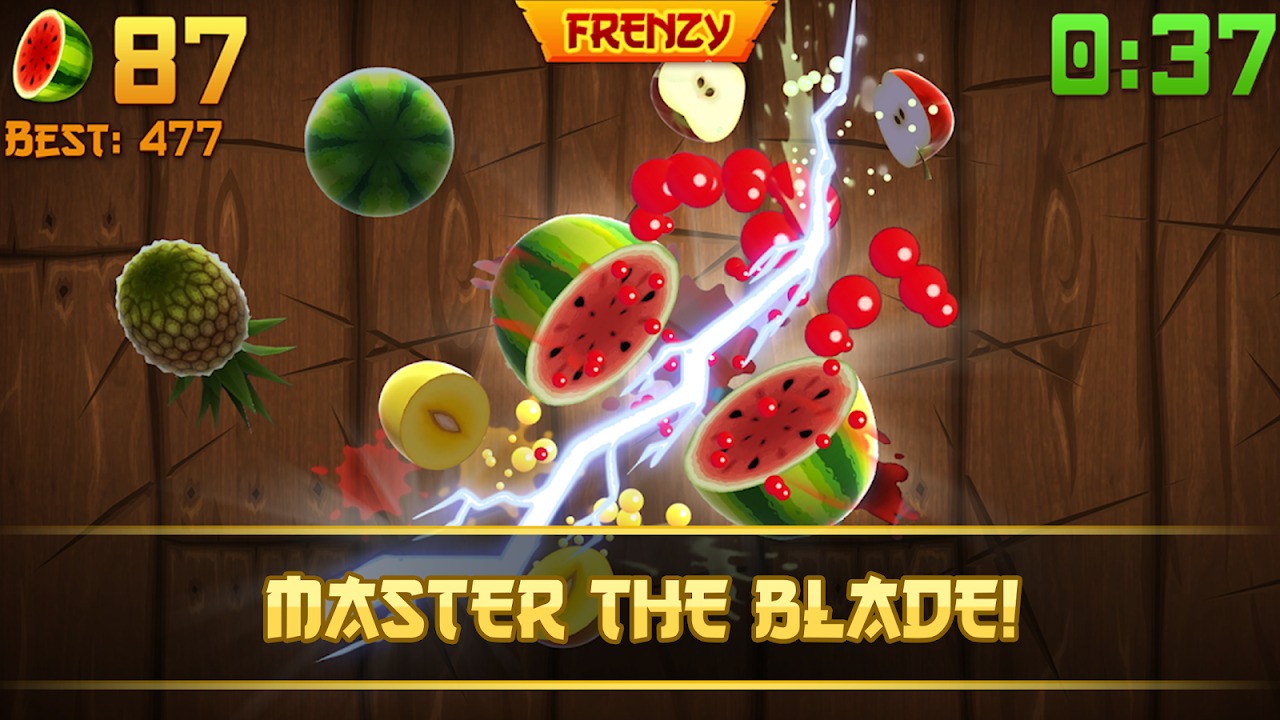
You drag a finger across the screen to cut airborne fruit while avoiding bombs. Classic mode ends when you drop three fruits or hit one bomb. Zen removes bombs for a calm, timed score run, and Arcade is a fast rush where special bananas trigger frenzies, freezes, and doubled points.
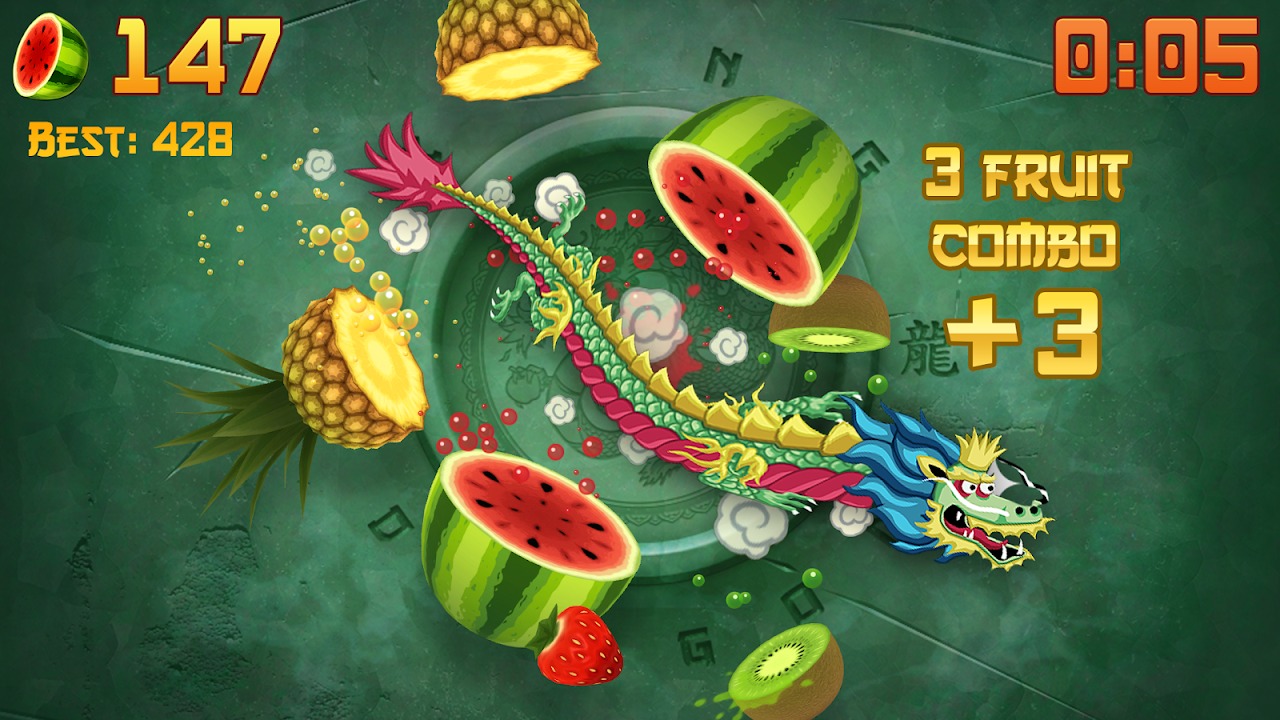
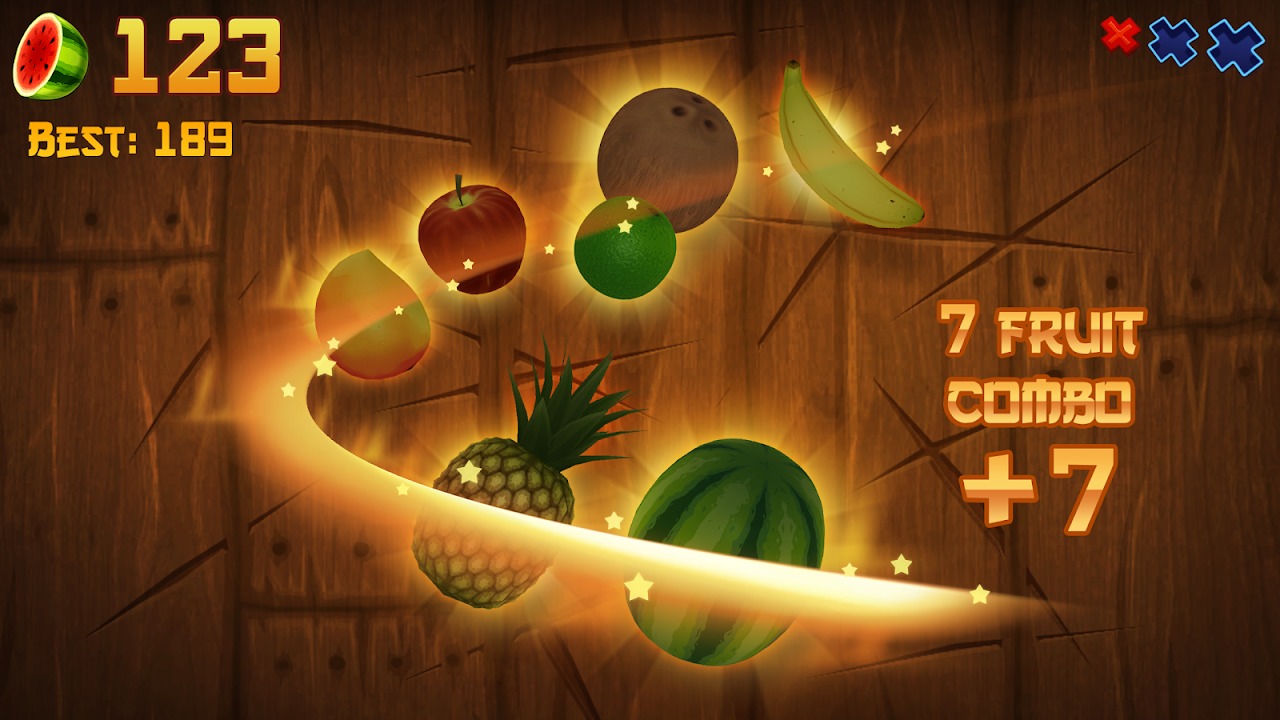
The real difficulty is greed. Waiting half a beat so five fruits line up for one cut is where the Fruit Ninja game lives, and blowing it on a hidden bomb makes me yank my thumb back like the glass is hot. Zen is my underrated pick — it’s what I open on a delayed bus, one earbud in, brain idling.
Which Version Should You Pick on iOS and Android?
The free app is the default download on both platforms and gets the live events. Fruit Ninja Classic is the paid, quieter original for people who hate ads. Fruit Ninja 2, the 2020 sequel, adds live opponents, leagues, and minigames, per its Google Play listing.
Functionally, the Fruit Ninja iOS and Fruit Ninja Android builds mirror each other, including the new Game Themes takeovers like Bluey, per recent App Store release notes. Cute for kids; noise for me. The sequel’s rhythm mode, Fruitar Hero, is the freshest idea in the whole Fruit Ninja mobile lineup. My money went to Classic, which plays closest to the version I remember thumbing on a hand-me-down phone.
Is a Fruit Ninja APK Download Safe?
Only if it comes straight from Google Play, where Halfbrick Studios is the listed developer. Third-party sites pushing a modified APK with unlocked blades or free currency are using the oldest malware bait on Android.
My rule after years reviewing mobile games: treat every “mod APK” page as hostile until proven otherwise. If you must look anyway, run this checklist:
- Install only via Google Play or the App Store, with Halfbrick Studios listed as developer.
- Skip files promising free currency or unlocked gear; the promise is the hook.
- Deny strange permissions — a fruit game has no business near your contacts or messages.
- Keep Play Protect on and scan anything you sideload anyway.
- Close any page demanding surveys or “verification” before the download.
My Pros, Cons, and Who Should Skip It
Here’s my scorecard from this reinstall.
Pros:
- One gesture runs everything, so first-timers need no tutorial.
- Rounds end inside a minute, filling dead time without eating an evening.
- Combo timing hides real skill; lining up a five-fruit cut is genuinely tense.
Cons:
- Free-build ad breaks land right as a run ends, exactly when I want another.
- Events, currencies, and themed blades crowd a game whose value is simplicity.
- High scores lean on lucky power-up spawns, so records can feel unearned.
Skip Fruit Ninja if you need story or progression, if you refuse ad-supported games and won’t pay for Classic, or if you burned out in 2012 — the core hasn’t changed, and that’s the point.
FAQ
Is Fruit Ninja free to play?
It costs nothing to install on iOS and Android, funded by ads and optional purchases, per both store listings. The ads were tolerable in my sessions but frequent enough to notice. If that grates, the paid Fruit Ninja Classic is the cleaner buy.
Is Fruit Ninja okay for kids?
Content-wise, yes — the only splatter is juice, and family tie-ins like the Bluey theme, noted in App Store release notes, show who Halfbrick is courting. My hesitation is commercial: ads and purchase prompts appear often, so I’d give a child the paid Classic instead.
Can I play Fruit Ninja offline?
Single-player modes ran fine for me in airplane mode, which is how I use the game on flights. Anything social — the sequel’s live matches and leagues, per its Google Play listing — needs a connection. Offline is honestly where this design makes the most sense.
What does Fruit Ninja 2 change?
It’s the 2020 sequel built around competition: head-to-head matches, leagues, and minigames like the rhythm-based Fruitar Hero, per its Google Play listing. I find it livelier but busier. Stay with the original loop for calm; pick the sequel if scores need stakes.
Should I download a Fruit Ninja APK from a third-party site?
No, and I won’t soften it. Every unofficial APK of this game I’ve seen promised mods no official store would allow — the standard lure for Android malware. Halfbrick ships through Google Play, so use that or skip the game rather than gamble your device.
DOWNLOAD LINK


Choose the appropriate version for your device.
 American Farming 2 Review: Is This Mobile Farm Sim Worth It in 2026?
 Clash of Clans Review 2026: Can My Dorm-Room Obsession Survive a 9-to-5?
 Fantasy Life i Review: LEVEL-5’s Cozy RPG in Your Pocket
 Gangstar Mirage City – The Badge Is Licensed, the Machine Underneath Is Not