
OpenClaude is a free, open-source coding agent for the terminal that lets you swap in almost any AI model you like: OpenAI, Gemini, DeepSeek, Grok, or a local Ollama model. Gitlawb, an agent-tooling group, maintains it, and it surfaced on GitHub within days of the Claude Code leak of March 31, 2026 (per Ship Safe’s coverage).
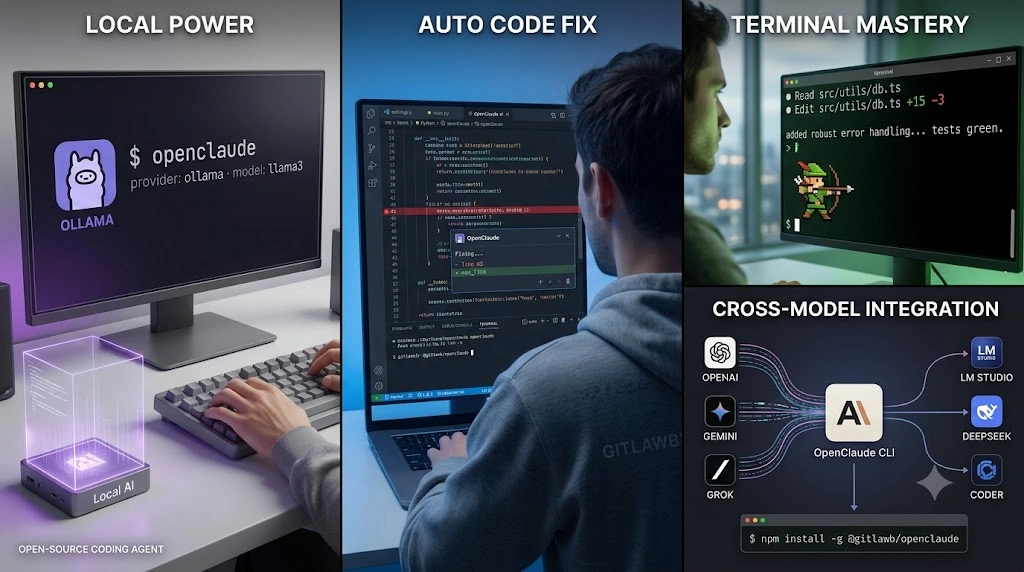
It installs on macOS, Linux, and Windows via npm (Node 22+, per the README), plus an Arch AUR package. The CLI costs nothing; you only pay your model provider. Per the OpenClaude GitHub page, it sits at 30.3k stars, 8.9k forks, and 36 releases, the newest being v0.25.0 from July 20, 2026.
My overall take: it is the most flexible route I have seen to Claude Code’s workflow on a model of your choosing, and also the one with the thickest fine print, which I read closely so you can decide faster.
Where did OpenClaude come from? The Claude Code leak
OpenClaude descends from Anthropic’s Claude Code, whose full TypeScript source leaked when its npm package, version 2.1.88, shipped with a debug source map. Researcher Chaofan Shou caught it on March 31, 2026, per TechRadar. Gitlawb reworked the code around a multi-provider backend, and its README states plainly that the project began with Anthropic’s code.
Anthropic called it a packaging error rather than a breach (per AlternativeTo) and sent DMCA notices to about 8,100 repos mirroring the code (per Fast.io). What strikes me is how upfront it is about that messy start. The README calls it an independent, community-run project with no ties to Anthropic; that candor kept me reading instead of closing the tab.
How do you install it, and does it run on Ollama?
You install OpenClaude with one npm command, launch openclaude in a repository, and type /provider to connect a model. The docs list 40 first-class providers, and any OpenAI-compatible endpoint works too. Ollama runs locally and skips the API key entirely.
npm install -g @gitlawb/openclaude@latest- Open a repo and run
openclaude. - Type
/providerand pick Ollama, LM Studio, OpenRouter, or a paid API.
The provider table is where my scroll finger gave up before the list did: Kimi, GLM, Groq, Mistral, Copilot, Bedrock, Azure. One caveat I take seriously: the README itself warns that small local models lose the thread on long tool chains. Fresh installs also default to Gitlawb’s Opengateway, which needs a key, per the README.
Is it legal and safe to install? My checklist
OpenClaude sits in a legal gray zone. Its LICENSE file puts contributors’ changes under MIT, keeps the inherited code under Anthropic’s copyright, and admits the project never got Anthropic’s permission to redistribute it. Technically, it asks before risky actions by default unless you switch that off.
I read that notice twice; it changed how I judged every feature. This is a provenance problem, not a runtime exploit, and I would not put it near a company codebase without a lawyer’s nod. For a personal machine:
Before you install
- Install only via npm (
@gitlawb/openclaude) or the AUR package linked in the docs, never zip mirrors. - Verify with
openclaude --versionagainst npm’s dist-tags, as the docs suggest. - Never move Claude Code credentials into
~/.openclaude; the README says re-authenticate instead. - Skip
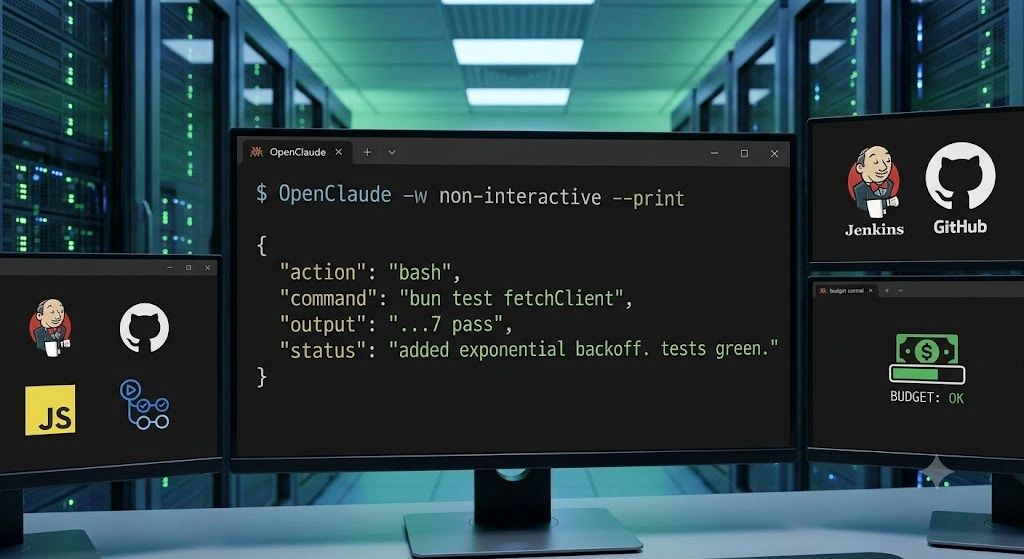
--yolo; it bypasses every permission check, and the CLI reference reserves it for offline sandboxes. --printskips the workspace trust prompt; only use it in folders you trust.
OpenClaude vs Claude Code: what changed in the latest releases
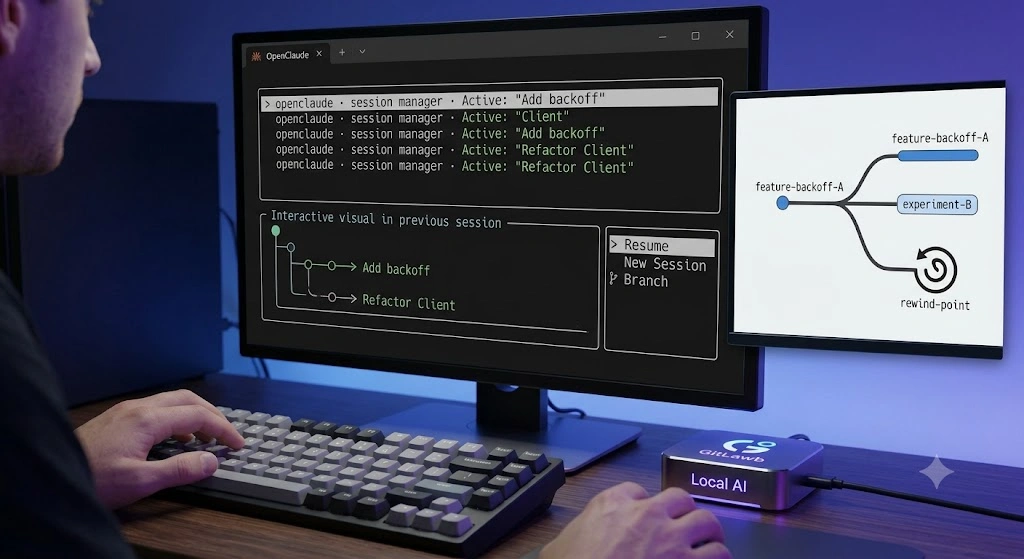
The difference is the model, not the workflow. OpenClaude keeps the read-search-edit-test loop and swaps the backend. Per the GitHub release notes, recent versions added background sessions, automatic provider fallback on rate limits, and Vietnamese descriptions for all 86 slash commands (per the docs). My view: this fork moves faster than most I track, and its signed CI releases reassure me more than its origin story.
Pros
- Local privacy: with Ollama the model runs on your machine, so your code stays off cloud APIs.
- Real tooling: bash, grep, MCP servers, and git worktrees are core, not add-ons.
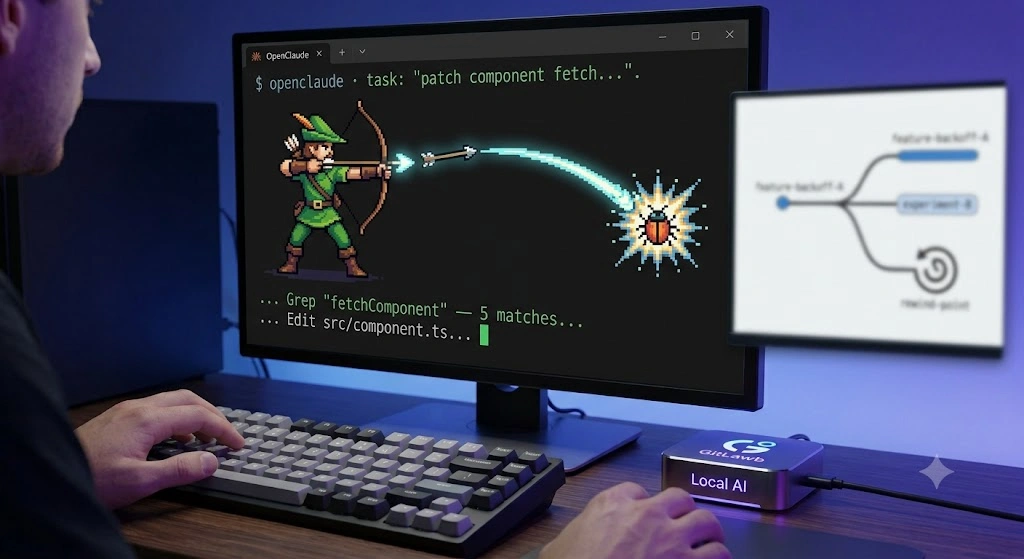
- The buddy: a pixel-art sidekick with gacha odds (1% legendary, per the buddy page); silly, but it charmed me.
Cons
- Legal exposure: the LICENSE tells users to judge their own legal position, which unsettles me.
- Uneven providers: the README admits Anthropic-tied features can vanish on other backends.
- Web search scrapes DuckDuckGo on non-Anthropic models, which the README says can get throttled.
Frequently Asked Questions
Is OpenClaude free?
Yes. The CLI is free and open source; the only cost is the model you connect. Run Ollama locally and pay nothing beyond electricity, or use OpenAI or Gemini at API rates. To me, that flexibility is the strongest reason to try it.
Is it the same as Claude Code?
No. It shares the architecture because it started from the leaked Claude Code source, but Anthropic neither builds nor endorses it. My rule: treat it as a cousin, not a twin, and expect rougher edges on non-Claude models, as the README itself admits.
Can it run offline with Ollama?
Yes. Ollama needs no API key, and per the README OpenClaude asks it for a 32,768-token window on every call so session history survives. My advice: a coder-tuned model and small tasks, since that same README warns small models stumble on long tool chains.
Is it safe for work projects?
For personal projects, yes, with permissions left on. For company code, I would pause. The OpenClaude LICENSE states outright that the inherited code stays Anthropic’s copyright and that no authorization was granted, so I would want a legal opinion before it touches any production repository.
Could Anthropic shut it down?
Nobody knows, and I won’t pretend otherwise. Anthropic sent DMCA notices to direct mirrors of the leak, per Fast.io, yet this repo stays live with 30.3k stars on GitHub. My read: the risk is real, so treat OpenClaude as a tool, not a business foundation.
 How To Get Robux for Free News 2026: 6 Scam Signals
 GPT-6 Astra: What OpenAI Shipped, What It Costs, and Where the Leash Is
 Top 5 Mobile Game of the Year 2026
 How To Check Roblox Account Status